

88 Billion Gallons of Water
No, that’s not a data center water use statistic…
August 7, 2026
The debate over data centers has become the loudest water story in Texas. The quieter, more pressing one is happening underground.
Unless you've had your head in the sand these past few months, you know that data centers have become the loudest water story in Texas. The Governor has paused new approvals until the state can account for how much power and water these facilities use. County meeting rooms are packed with people who want no part of one nearby, and the headlines keep asking whether AI is about to drink the state dry. The worry is understandable, and some of the scrutiny is overdue, even as much of the industry has already moved to low-water cooling and reuse designs that draw far less than the alarm suggests.
But it is also a narrow slice of the Texas water story. Data center water use is worth understanding and worth getting right. Focusing only there, though, is like pressing your fingers over a few cracks in a dam while the whole structure gives way behind you. The hundreds of billion dollar issue is the infrastructure underground.
Last year, Texas lost about 88 billion gallons of water to leaks and breaks in its six largest cities alone. That is more than every data center in the state used over the same period and then some, and it vanished before it reached a single home, farm, or cooling system. The water Texas should worry about most is the water already slipping away through cracked mains and failing joints in a system two and three generations old. And the companies in the middle of the data center debate are unusually well positioned to help stop the loss.
WHAT TEXAS IS REALLY LOSING
The 88 billion gallon figure comes from the water-loss audits the big cities file each year with the Texas Water Development Board. Houston lost about 31.8 billion gallons. San Antonio, 19.5 billion. Dallas, 17.6 billion. Fort Worth, 5.9 billion, which cost the city more than $8 million. Those are the systems with engineering staff and audit budgets. The smaller towns, the ones with neither, tend to lose a larger share and measure far less of it. So that 88 billion is likely much higher.
The cost of catching up is steep. In April, the Texas Water Development Board put the state's water infrastructure needs at $174 billion over the next 50 years, more than double its estimate from four years earlier. That figure covers new supply and does not fully account for repairing what is already in the ground. Add wastewater and the repair backlog, experts told the Texas Tribune, and the real number approaches a quarter of a trillion dollars. Last November, voters approved Proposition 4, which dedicates up to $20 billion to water over 20 years. It was a real down payment but also a fraction of the need, and the American Society of Civil Engineers still graded Texas drinking water a D+ in 2025, down from a C- four years earlier.
For small systems, money is only half the barrier. The other half is the capacity to reach it. In 2023, 267 Texas communities applied for federal drinking water funding through the state. Thirty-eight were invited to complete an application. Ten received money. The engineering documents, audits, and financial detail the process demands assume a city hall and funding that a town of a few hundred does not have.
What 88 Billion gallons of water looks like:
Nearly 133,000 Olympic-sized swimming pools.
Around 440 golf courses watered for a full year (typical course runs about 200 million gallons a year)
Roughly 88,000 McDonald's restaurants' worth of water for a year, or enough to run every McDonald's in America for more than six years.
More than 200,000 football fields covered a foot deep in water.
More than a year of drinking water for all 13 million head of cattle in Texas.
Enough to irrigate around 135,000 acres of Texas cotton for a season.
Nearly twice the water the entire city of Austin uses in a year, which runs about 50 billion gallons.
WHEN A TOWN CAN’T KEEP UP
Sweeny sits about 60 miles southwest of Houston. Its water runs brown often enough that residents have stopped trusting the tap, cooking and brushing their teeth with bottled water and watching the tap water stain their sinks and clothes. Years of aging infrastructure and naturally occurring minerals left manganese and iron at more than three times the recommended limit, and a real fix would cost millions the town does not have. When the state offered Sweeny a funding package to address it, the town turned the offer down. Its manager said there was no way to assemble the required engineering documents inside the 30-day window. The money was there. The town could not reach it.
Sweeny is not unusual. In the Neches River Basin of East Texas, a regional river authority estimates that about 17 percent of retail water systems across 17 counties have either failed or are at risk of failing, and it has started taking some of them over to keep water flowing. Boil-water notices have become routine across much of rural Texas.
The far end of that road looks like Hartman, Colorado. This summer, with its water tank compromised and its elected officials resigned, the state formally declared the town of 30 abandoned, the only remaining way to get its residents clean water. Few Texas towns are that far gone, but plenty are closer than their residents realize.
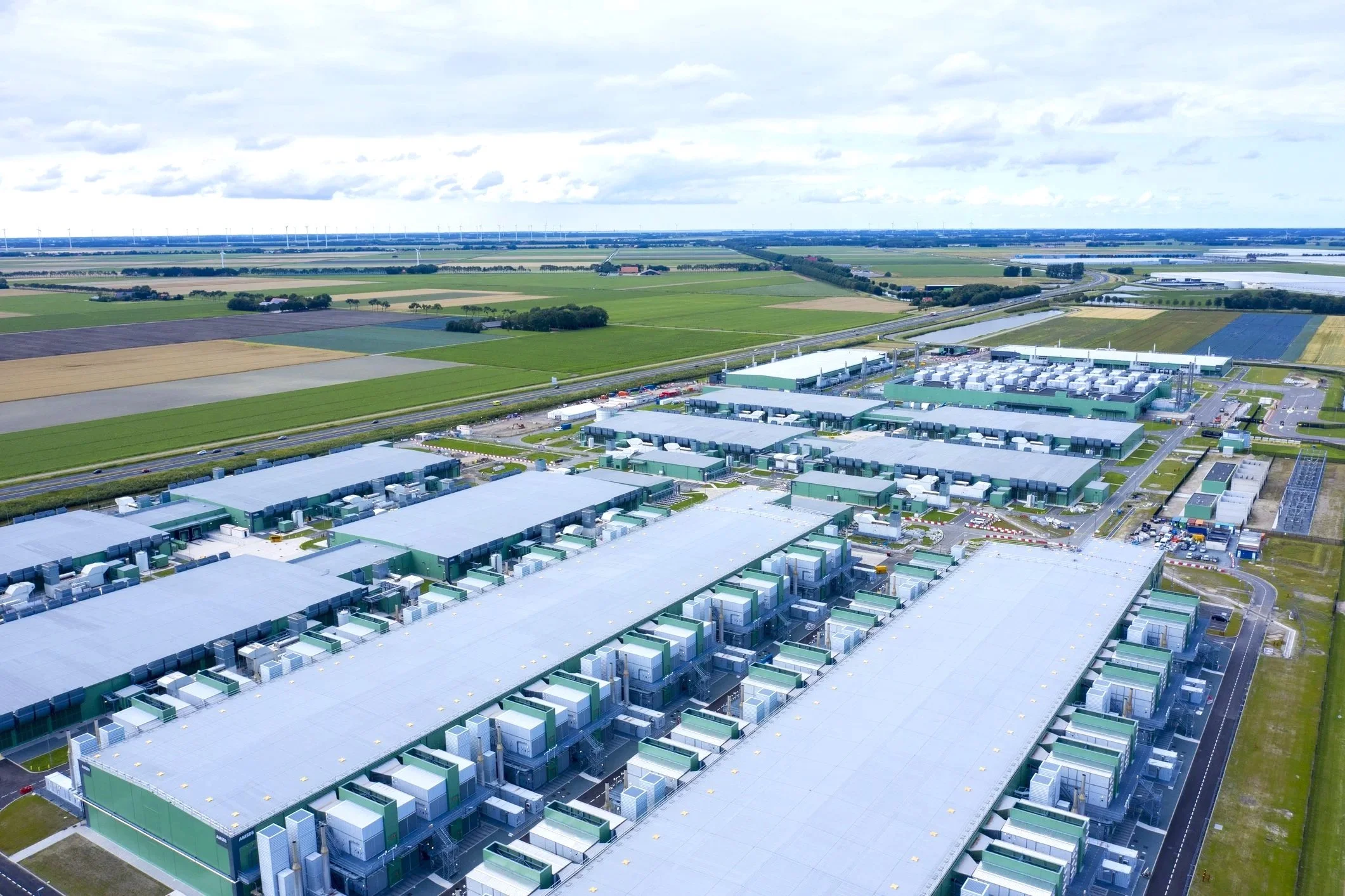
Many Data Center Developers Are Responsibly Managing Water Use
The stewardship already underway, and rarely part of the debate:
Using little to no water to cool. New Texas campuses are built on sealed, closed-loop and direct-to-chip systems that fill once and never evaporate. The Abilene campus uses about what the city uses in a single day spread across an entire year.
Backing reclaimed water over drinking water. Texas utilities are signing deals to sell operators treated wastewater instead of potable supply. Harlingen's utility agreed to provide one data center more than 4.6 million gallons a day of reclaimed water, keeping it off the drinking-water system.
Paying to modernize local water systems. A common Texas structure has the operator pre-fund a city's treatment and pipeline upgrades in exchange for recycled water, recapitalizing a municipal utility the town could not afford to fix on its own.
THE DATA CENTER QUESTION
The aging infrastructure and future needs is the water problem with the most at stake, and it seems to be drawing the least attention. So it is worth being precise about where data centers actually fit.
Today, data centers account for roughly half a percent of the water Texas uses. The projections that put them at six or nine percent are worst-case models that assume evaporative cooling and power drawn from the most water-intensive sources. They do not describe what most new projects are being built to do. A closed-loop system fills once and recirculates the same water, so once it is running, the day-to-day draw is modest, closer to what an office building uses, going mostly to restrooms, cleaning, and grounds rather than to cooling the servers. Evaporative cooling works the other way, continuously boiling off water that has to be replaced, which at a large campus can climb into the millions of gallons a day. Every site is different, but the gap between those two approaches is enormous, and it comes down to the design a developer chooses.
The viral "one AI prompt drinks a bottle of water" line works the same way. The figure Google publishes for a typical prompt is about five drops of water at the data center. The bottle number, around 500 milliliters, counts the water used to generate electricity across the whole grid, most of it nowhere near a server. Both get called "AI water use," and they measure very different things. But AI gets a bit of a bad rap here. Think about YouTube videos running through data centers. On average, users upload over 20 million videos to YouTube daily and billions of individual video views occurring across the platform every day, but people don’t seem to put that type of use under the same scrutiny.
None of this makes the concern illegitimate. Water is tight across much of Texas, and communities are right to ask hard questions before a large new user moves in. What gets lost is proportion. The worry now settles on a use that accounts for about half a percent of the state's water, while the 88 billion gallons lost to leaks each year draw almost none of the same attention.
WHERE DATA CENTER DEVELOPERS FIT
Consider Lacy Lakeview, a town of about 8,000 outside Waco where most of the water and street infrastructure went in more than 50 years ago. Its realistic choices are a rate increase residents can barely absorb or new development large enough to help carry the cost. That is why its mayor is looking seriously at a data center. The interest is practical. The system is failing, and the money to fix it is not there.
That is the opening most of this debate misses. A company moving into a Texas town brings things the town has been short on: capital, engineering talent, and a direct stake in reliable local infrastructure. Point even a portion of that at the water system the community is already worried about, and the calculation changes.
It can mean funding the leak audit a small utility could never afford, or the application a town like Sweeny could not complete in time. It can mean backing the line replacement or treatment-plant upgrade a city deferred for a decade. It can mean taking a municipality's treated wastewater as cooling supply, which gives the utility a paying customer for its effluent and eases demand on drinking water at the same time.
Some operators are already working this way. Google has committed $10 million to a Texas Water Impact Fund and pledged to help modernize water and wastewater systems in the communities where it operates, while designing its new Texas sites around closed-loop cooling. Near San Antonio, Microsoft helped permanently protect more than 1,500 acres of the Edwards Aquifer recharge zone, a water source for over two million Texans, and runs much of its local operation on recycled water. Other companies can find their own version of the same idea, and many are.
“Investing in the water a community depends on is how a company can become a genuine partner rather than a temporary tenant. It is community engagement that reaches past messaging and leaves something behind”
BEING A REAL COMMUNITY PARTNER
This aging water problem is not the data center industry's to solve. It was decades in the making, it belongs to the state and the communities living with it, and it would be here whether or not a single server ever came to Texas. What the industry has is less common: the means to help, and a real stake in the outcome, since the same water these communities depend on is the water their projects depend on too.
The economic impact of these projects is significant, and in many rural communities it is unlike anything they have seen, reshaping a tax base and a local economy that had been thinning for a generation. Going a step further, to invest in the water infrastructure that both the project and the town rely on, is how a company shows up as a genuine partner rather than a temporary tenant.
This is community engagement that reaches past messaging. Investing in a town's water is a commitment that outlives a ribbon-cutting: a system that works, a utility on firmer footing, a community better able to keep its people. Approval tends to follow that kind of investment, though earning it is never the reason to make it. Using water carefully keeps a project from adding to the strain. Helping repair what was already failing is what makes a company part of the place.
Texas is going to keep growing, and demand on its water will rise with or without any one project. What is finally at stake is whether these communities have water systems built to last, the kind of infrastructure that keeps a town livable for the next generation. The developers who treat their own use responsibly and lend their weight to the systems around them will be doing work that endures, in places that remember who helped. For a business planning to operate somewhere for decades, there is no stronger foundation to build on.
Coover | Goss is a Texas-based strategic communications and community engagement firm supporting infrastructure developers and operators across the energy and digital infrastructure landscape. We help teams build durable local permission through research-driven engagement strategy, stakeholder mapping, and on-the-ground execution.