

A Day Without Data Centers
What would happen if the digital infrastructure behind modern life went dark for 24 hours?
April 6, 2026
Data centers are easy to reduce to headlines about AI, power demand, or big buildings on the edge of town. But take them away for 24 hours, and the story changes quickly. This is not just about entertainment going dark. It is about the systems modern life quietly depends on stopping all at once.
If every data center went offline for one day, most people would first notice the obvious losses: no streaming, no social media, no cloud apps. What they would feel next is something much bigger: how much of everyday life now runs on digital infrastructure they never see.
Imagine waking up tomorrow and finding that social media is down, your music will not load, your email will not sync, and your banking app is unresponsive. Annoying, sure. But that would only be the beginning.
For most people, the first signs would feel inconvenient. By the end of the day, they would feel foundational.
From streaming and social media to schools, clinics, payments, farm operations, and public services, a day without data centers would disrupt far more of everyday life than most people realize.

8:00 AM - IT STARTS WITH THE OBVIOUS
At first, it feels like a bad tech morning.
Streaming platforms are down. Social media will not load. Email is stalled. Cloud photo libraries, shared files, and messaging apps stop working. People assume it is temporary because we are used to the occasional outage. Refresh. Restart. Try again. Nothing changes.
Most people would begin with the consumer-facing frustrations because those are the most visible parts of the digital world. No music on the way to work. No calendar sync. No online shopping. No food delivery app. No rideshare. The services people touch every day start to flicker out, one by one.
That alone would be disruptive. But it would only hint at the larger role data centers play.
10:00 AM - THE WORKDAY BEGINS TO STRAIN
By mid-morning, the disruption moves beyond inconvenience.
Businesses that rely on cloud-based software feel it immediately. Shared drives are inaccessible. Collaboration platforms are down. Customer management systems are unavailable. Scheduling tools, internal dashboards, and the software that keeps daily operations moving stop responding.
For some companies, that means lost productivity. For others, it means a near standstill.
Schools and universities run into the same problem. Learning portals go dark. Administrative systems are interrupted. Teachers, students, and parents lose access to the digital tools that now sit at the center of normal operations.
In rural communities, the strain can show up differently. A small-town business may not have layers of backup systems or nearby alternatives. A local office, ag business, or family-owned operation relying on cloud tools, online ordering, or digital communications can feel the downtime more directly because distance already limits other options.
The point becomes clearer: this is not just a consumer technology story. It is a work, education, and operations story too.


1:00 PM - EVERYDAY TRANSACTIONS START TO FEEL LESS ROUTINE
By lunchtime, the effects are harder to dismiss as just a bad internet day.
Banking apps are unreliable. Digital payment systems slow down or fail. Online purchases cannot process normally. Businesses that depend on connected systems to manage orders, inventory, customer service, or transactions begin to run into real friction.
Travel is affected too. Airline systems, hotel platforms, booking tools, and mobile travel services all depend on digital infrastructure behind the scenes. What usually feels seamless starts to feel fragile.
Transportation would feel it too. Rideshare platforms like Uber and Lyft depend on cloud-based systems to match riders, route drivers, process payments, and manage trips in real time. Connected fleet systems and delivery platforms operate the same way. Even driverless and highly automated vehicle systems rely on data processing, mapping, connectivity, and remote support infrastructure beyond the vehicle itself. When that digital layer is interrupted, movement gets less seamless very quickly.
Even basic navigation becomes less certain. Mapping tools, traffic data, location-based services, and the platforms that help people move through their day depend on infrastructure few people ever think about. Once those systems disappear, the convenience people take for granted starts to unravel.
In rural areas, this part of the day can hit another layer of daily life. Farm operations increasingly rely on connected platforms to monitor equipment, manage data, and coordinate work in real time. If that digital backbone goes dark, the problem is not just inconvenience. It is lost visibility, slower coordination, and more friction in daily operations.
This is usually the point where the problem starts to feel less digital and more practical.

4:00 PM - THE INVISIBLE INFRASTRUCTURE BECOMES VISIBLE
By late afternoon, the deeper dependence is impossible to ignore.
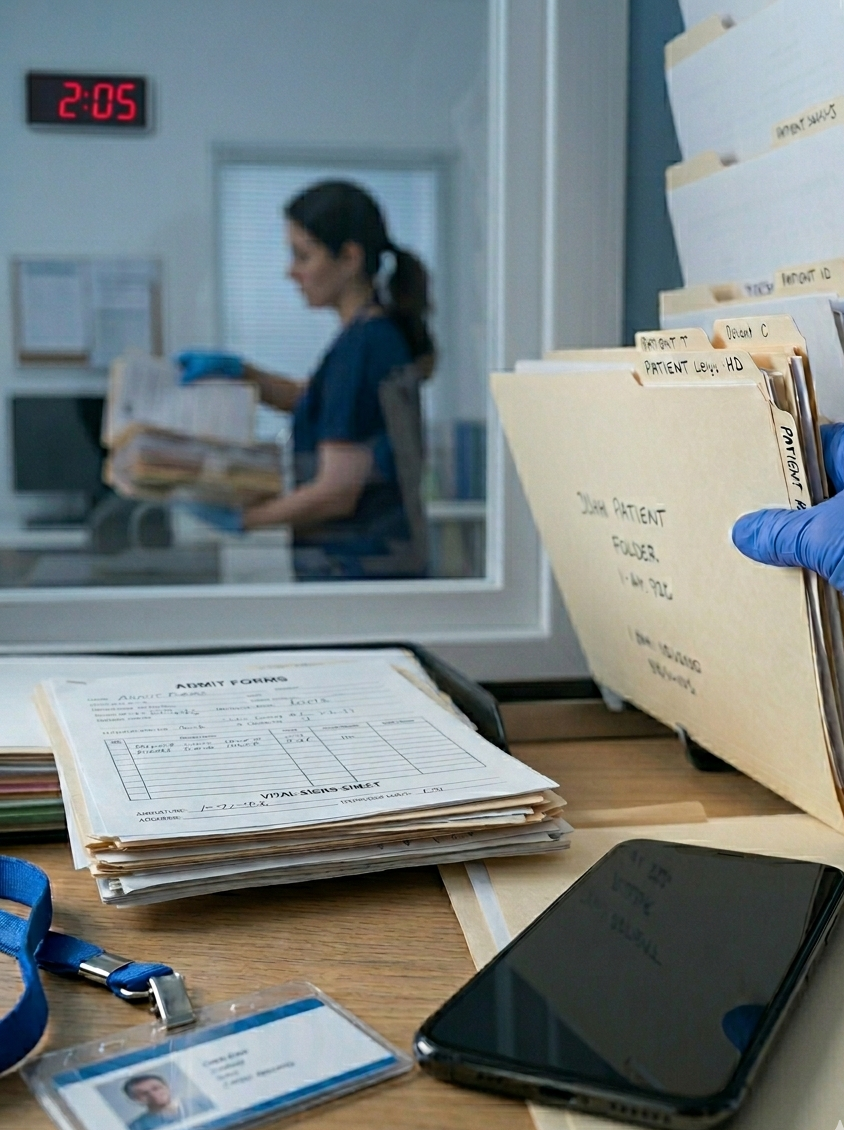
Hospitals and clinics rely on digital systems for far more than websites and email. Records access, scheduling, internal coordination, and a growing number of connected tools all sit within a larger digital ecosystem. The same is true across public services, logistics networks, and the systems businesses use to track goods, manage workflows, and communicate in real time.
That dependence can be especially tangible in rural communities. Telehealth, remote coordination, and digital access help close the gap when care, services, and specialists are farther away. When that backbone is interrupted, the issue is not just a website being down. It affects access, coordination, and time.
Emergency communications, government platforms, utility coordination, and connected services across sectors would all feel pressure in different ways. Not every system would fail in the same manner, and not every disruption would be dramatic. That is part of the point. The impact would show up as friction, delays, interruptions, and workarounds across nearly every part of daily life.
That is what makes data centers so easy to overlook and so important at the same time. Most people do not see them in their daily routines. They see what those facilities make possible.
BY THE END OF THE DAY, IT IS NO LONGER ABOUT CONVENIENCE
What began as a day without streaming or social media has become something else entirely: a day where modern life loses much of the digital infrastructure operating quietly behind it.
That does not mean every service disappears in the same way or that society grinds to a cinematic halt. It means a normal day becomes noticeably harder to operate. Businesses slow down. Services become less reliable. Routine transactions take longer. Systems people assume will always be there suddenly are not.
In some communities, especially rural ones, that can land even harder. When nearby options are fewer and daily life already involves more distance, digital systems do more than add convenience. They help close the gap. Remove them for a day, and that distance starts to reappear.
And that is the real point of the exercise.
Data centers do not just support the internet economy. They support ordinary life.

“Most people do not see data centers in their daily routines. They see what those facilities make possible. And in some communities, especially rural ones, digital systems do more than add convenience. They help close the gap.”
WHAT PEOPLE MISS ABOUT DATA CENTERS
Most people encounter data centers through a narrow public lens. A new project is proposed. A large building appears on the edge of town. The conversation turns to size, power demand, water, tax incentives, or growth. Those are valid issues and important questions. But they can also flatten public understanding of what these facilities actually are.
Because data centers are mostly invisible in everyday life, it is easy to associate them only with the most visible parts of the digital world: streaming, social media, cloud storage, AI. In reality, they underpin a much broader set of systems people use every day without thinking twice. Financial transactions. Business operations. Travel and logistics. Medical and educational platforms. Communications tools. Public-facing services. The software layer behind modern life.
That point matters in rural communities too. It is easy to look at a data center and think first about a distant digital economy. It is harder to see the connection to a clinic using telehealth, a farm using connected tools, a local business relying on digital payments, or a school depending on cloud-based systems. But those connections are real.
That is part of the disconnect in the broader conversation. Data centers are easy to see as buildings. They are harder to see as infrastructure.
But if they went away for even one day, that distinction would become very clear, very quickly.
The systems behind modern life are easy to overlook until they stop working. A day without data centers would make their role impossible to miss.
“If the public sees data centers only as large, abstract industrial projects, the conversation starts in a shallow place.”
THE TAKEAWAY
The point of a thought experiment like this is not to dramatize dependence or gloss over legitimate questions about infrastructure growth. It is to make something visible that usually is not.
Data centers sit in the background of modern life. That is precisely why they are easy to underestimate. People do not think about them when they send an email, open a banking app, schedule an appointment, use a navigation tool, collaborate at work, access a school portal, manage farm operations, or connect to care remotely. They think about the service in front of them, not the infrastructure behind it.
But the infrastructure behind it matters.
A day without data centers would be a reminder that these facilities do far more than power entertainment and convenience. They help support the digital systems people, businesses, and institutions now rely on every day.
And whether the public conversation always frames them that way or not, that is what they have become: part of the operating infrastructure of modern life.
That is where the conversation gets more interesting and more important. Communities are right to ask hard questions about scale, infrastructure, and local impact. Developers also have a responsibility to explain more clearly what these projects actually support beyond the headlines. If the public sees data centers only as large, abstract industrial projects, the conversation starts in a shallow place. A better starting point is acknowledging both sides of the equation: the local questions are real, and so is the role this infrastructure now plays in everyday life.
Coover | Goss is a Texas-based strategic communications and community engagement firm supporting infrastructure developers and operators across the energy and digital infrastructure landscape. We help teams build durable local permission through research-driven engagement strategy, stakeholder mapping, and on-the-ground execution.