
Reframing the Texas Data Center Story
Part Two
November 20, 2025
DATA CENTERS: REFRAMING THE NARRATIVE & BUILDING LOCAL TRUST
No other state has experienced such a concentrated evolution of public perception toward energy and infrastructure. But with each new wave of infrastructure, public expectations have grown more complex. Communities are asking tougher questions about energy use, water, and local benefit - and they’re organizing faster when they don’t get answers.
Similar to the shift in public sentiment seen with wind, solar and battery storage in recent years across Texas, we are seeing the same storyline with data centers – only faster and louder. But the stakes are higher. These are not just industrial projects; they are symbols of the digital economy. They touch everything, yet their purpose remains invisible to most people. That invisibility creates a vacuum that opposition can easily fill with speculation and fear.
In Texas, social license isn’t permanent, it’s earned and re-earned every time you break ground. The companies that step up to explain their purpose clearly, show local benefit, and build relationships early will control the narrative. Those that don’t will be defined by it.
So what does a reframing of the data center narrative look like for Texans? Below are core components that we at CooverGoss see as paramount to shift the storyline and to lay a foundation for building trust at the local level:
1. From Industrial Mystery to Public Relevance
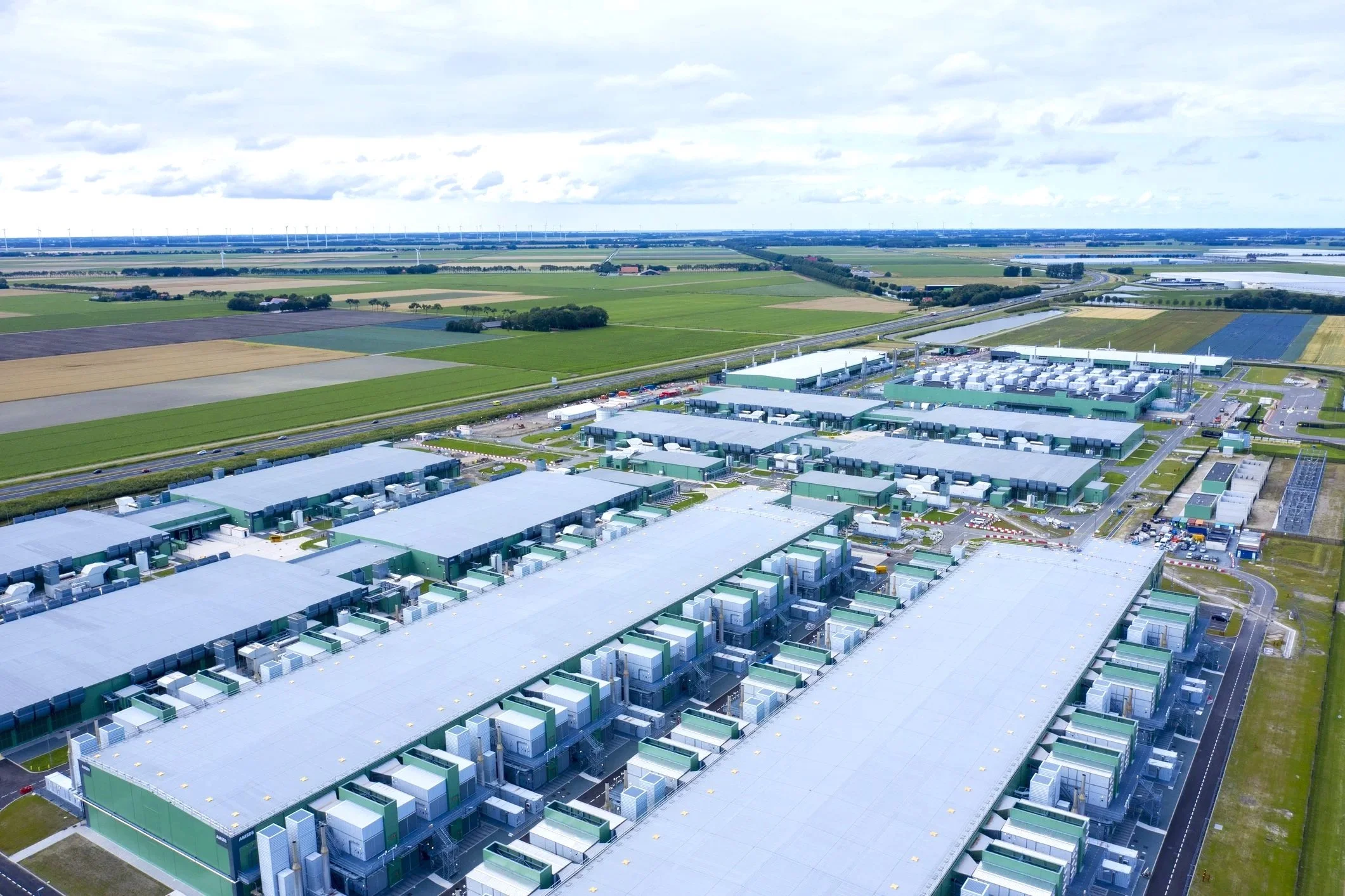
For most Texans, “data centers” are opaque - windowless buildings that hum, consume power, and seem detached from local life. That perception gap is where opposition thrives. If residents don’t understand what a data center does for them, they will define it by what they see: land conversion, water use, and diesel backup generators.
The first step in reframing the narrative is translating the invisible into the understandable. A resident in Grayson County doesn’t need to know about rack density or PUE ratios, but they do need to understand that data centers are what make:
Their 911 system work when the power goes out.
Their hospital’s imaging and patient data stay online.
Their kids’ school devices connect instantly to lessons.
Their small business payments process every night.
Their social media come to life and streaming services deliver their content.
When explained well, data centers reveal themselves as the quiet backbone of modern society. They are the digital equivalents of highways and power plants, unseen but essential. That’s the everyday, relatable reality of digital infrastructure. When communities see a data center not as an isolated box, but as the infrastructure of modern life, the conversation begins to shift.
“This is not just a facility — it’s where Texas keeps its digital heartbeat. It’s the power behind your public safety, your schools, and your economy.”
2. The Value Story: Turning Data Centers into Community Assets
To earn trust, the benefits must be local, visible, and measurable. Too often, the data center value proposition stops at “jobs and taxes.” In reality, it’s far richer, but companies rarely connect the dots publicly.
Economic Value That Endures
Every major project brings multi-phase benefits:
Construction & Trades: Hundreds of jobs for electricians, equipment operators, and skilled labor - critical for counties with cyclical employment.
Operations: Permanent technicians, maintenance crews, and local service providers.
Supply Chain: Security firms, landscapers, catering, HVAC specialists - local vendors that stay after the ribbon-cutting.
School Funding: Through JETI agreements, school districts can receive millions in stable annual revenue. For example, under a standard 10-year JETI limitation, a $500 million facility can generate $2–4 million annually for local ISDs - funding that directly supports teacher salaries and classroom technology.
Infrastructure Upgrades That Last
Most communities underestimate the lasting public improvements that come with data centers:
Upgraded roads and intersections for heavy construction traffic.
Expanded fiber and broadband corridors that serve residents.
New or reinforced substations improving reliability for surrounding neighborhoods.
Enhanced stormwater systems and emergency access routes.
These are legacy investments that outlive the facility itself.
Community Benefits That Feel Personal
Finally, there’s the emotional layer - the things people can see and feel:
Renovated parks and playgrounds.
Scholarships or community grant programs.
Public safety equipment for volunteer fire departments.
STEM education partnerships that bring students into real-world tech careers.
In Taylor, for example, local partnerships between Samsung’s semiconductor facility and the city helped reframe a massive industrial project into a regional pride point. Data centers can follow that model by tying visible community benefits directly to their footprint.
3. Responsibility and Accountability
Transparency is the new trust currency. The public no longer believes “we’ll be good stewards” without proof. They want specifics. Companies that publish Community Impact Reports - tracking taxes, energy sourcing, and water consumption - set the standard for accountability.
A strong Texas example is Microsoft’s San Antonio data center campus, which publicly reports its use of recycled water from the San Antonio Water System and details its renewable energy sourcing through ERCOT. That openness turned what could have been a liability - water use in a drought-prone region - into a conversation about innovation and efficiency.
The takeaway: If you don’t quantify your impact, your critics will.
4. Designing for Belonging
Community trust is also visual. A data center’s first impression isn’t its technical spec — it’s how it looks from the road, and how it fits into its surroundings.
Design matters:
Use berms, native landscaping, and tree buffers to soften industrial edges.
Install dark-sky lighting to prevent glare near neighborhoods.
Design architectural facades that match local color palettes and building forms.
In Pflugerville, for example, a hyperscale developer’s commitment to enhanced buffers and native vegetation earned unanimous council approval after initial skepticism.
Good design doesn’t just quiet complaints - it signals respect.
5. Economic and Grid Benefits
Beyond individual impacts, data centers are structural economic anchors.
Each $500 million facility typically generates 1,000+ construction jobs, 100+ permanent positions, and millions in annual property tax revenue.
They stabilize the local tax base, providing dependable revenue when oil, gas, or manufacturing cycles dip.
They improve grid reliability by financing substation expansions and, increasingly, co-locating with battery storage or flexible load controls that help balance ERCOT.
In this way, data centers are not just consumers of energy - they are participants in a modernized grid.
6. Bridging Urban and Rural Texas
Perhaps the most underappreciated benefit is geographic equity. Texas’s data center corridor stretches from the DFW Metroplex to the Brazos Valley, crossing communities that have long sat on the margins of tech investment.
For these towns, a single hyperscale facility can fund new schools, attract new broadband investment, and catalyze small business growth. By placing advanced digital infrastructure in rural and exurban counties, data centers quietly democratize the digital economy — bringing opportunity to areas long dependent on agriculture or extractive industries.